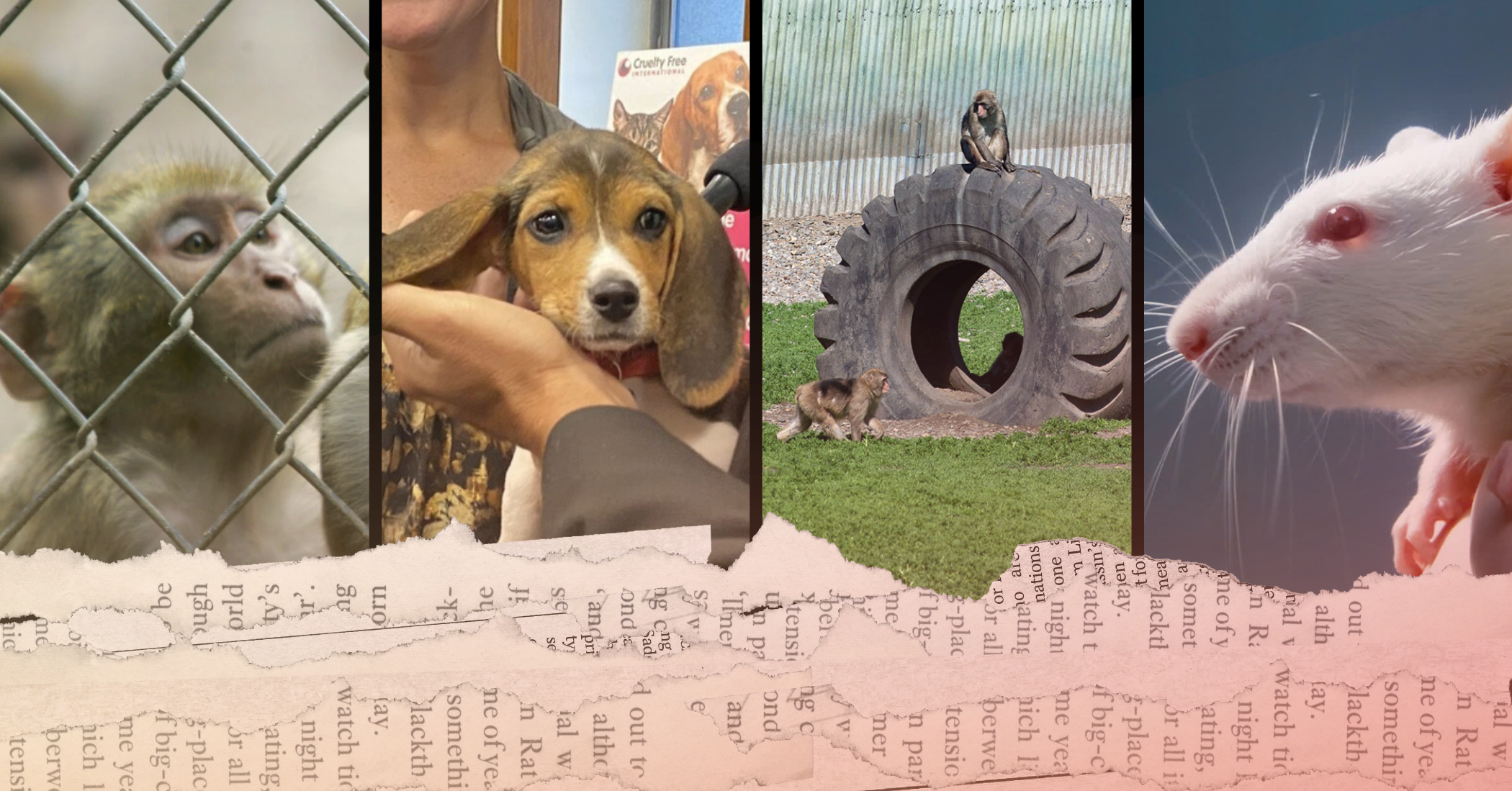
Here’s a roundup of the latest, biggest news stories related to animal research—all the recent media coverage you need to know right now to be the most effective activist for animals in labs.
When Biotech Opposes Better Science, Follow the Money
Rise for Animals, 2/12/2026
When Washington lawmakers considered HB 2542—a bill requiring validated non-animal research methods when available—public support was overwhelming. Yet a lone biotech industry lobbyist stood in opposition.
Why would a trade association that claims to support alternatives resist legislation designed to implement them? The answer lies in funding, governance, and political influence. 📰 Full Story →
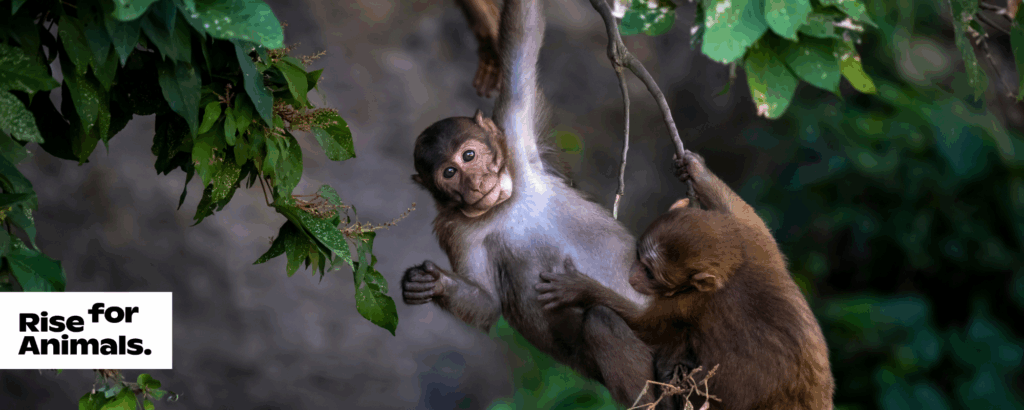
OHSU’s Primate Lab to Become a Primate Sanctuary?
Rise for Animals, 2/4/2026
On Monday, the Oregon Health & Science University (OHSU) Board of Directors voted unanimously to pass a resolution that authorizes negotiations with the National Institutes of Health (NIH) regarding a possible transition of the Oregon National Primate Research Center (ONPRC) into a primate sanctuary. 📰 Full Story →

US animal rights activist can be extradited from UK over 2003 bombings
Reuters, 2/6/2026
“An alleged animal rights extremist can be extradited from Britain to the U.S. to stand trial over bombings linked to animal testing more than two decades ago, a London court ruled.”
“U.S. citizen Daniel San Diego, 47, is accused in relation to bombings in California in 2003, with the so-called Revolutionary Cells of the Animal Liberation Brigade claiming responsibility. No one was injured in either of the incidents.”
“San Diego was found in Wales in November 2024, having been on the FBI’s most-wanted terrorist list since 2009 – the first domestic terrorist on the list, alongside the likes of late al Qaeda leader Osama bin Laden.” 📰 Full Story →

Investigation Requested About Immokalee Based Monkey Importer
Southwest Florida Online News, 2/6/2026
“PETA is calling on a slew of national and state authorities to investigate after receiving a whistleblower report that an Immokalee-based monkey importer and laboratory supplier BC US LLC tossed a wooden crate containing a live monkey into a biohazard waste dumpster, which was then trucked across the state—and no one at BC US noticed the primate, who should immediately have been placed in quarantine, fed, and watered, was missing until he was found alive in Miami five days later.”
“The monkey was one of hundreds of long-tailed macaques who were packed into wooden crates and endured a 28-hour flight aboard a charter plane flown by Poland-based SkyTaxi from Mauritius to Miami International Airport that began on Tuesday, January 27. The primates were then unloaded and trucked two hours north to BC US in Immokalee, where staff unloaded them from the shipping crates into quarantine cages late at night on January 28. Staff threw the crates into a biohazard dumpster, at least one apparently containing a live monkey. The monkey stayed there, when temperatures dropped into the 30s at night for two days before waste disposal company Stericycle collected the dumpster on Friday, January 30. It is unknown where it went from there, but it ended up in Miami, the whistleblower alleges. The dumpster was unloaded on Monday Feb 2, and the monkey who had now been without food or water for over five days reportedly got loose inside the facility, before being captured and sent back to BC US.” 📰 Full Story →
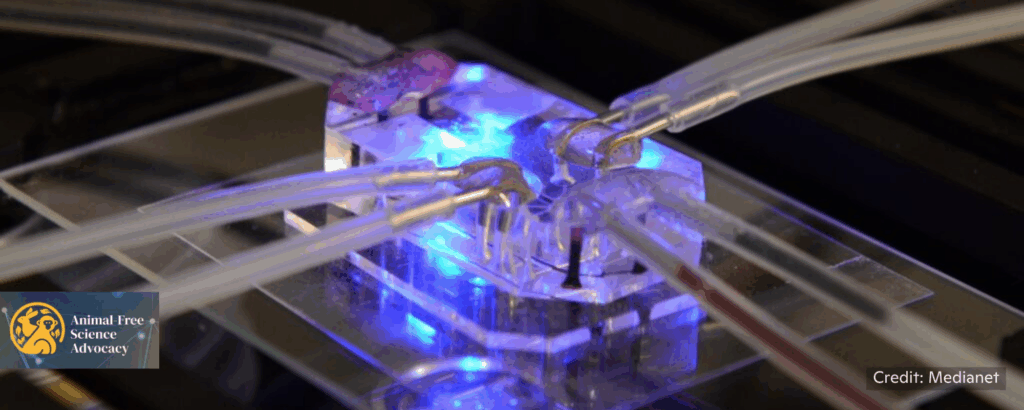
Federal Budget 2026-27: AFSA calls for $5m pilot to validate animal-free methods and improve health research translation
Animal-Free Science Advocacy, 2/6/2026
“Animal-Free Science Advocacy (AFSA) has lodged a 2026–27 pre-budget submission urging the Australian Government to invest $5 million in FY2026–27 via the Medical Research Future Fund (MRFF) to establish a competitive, time-limited pilot to advance regulatory-aligned validation of non-animal research methods (NAMs)—including organoids, organ-on-chip systems and computational models.”
“Recent public polling shows strong public backing for replacement of animals in research: • 71% of Australians support replacing animals with scientific alternatives (up from 61% in 2018) • 71% support directing medical research grants toward developing alternatives.” 📰 Full Story →
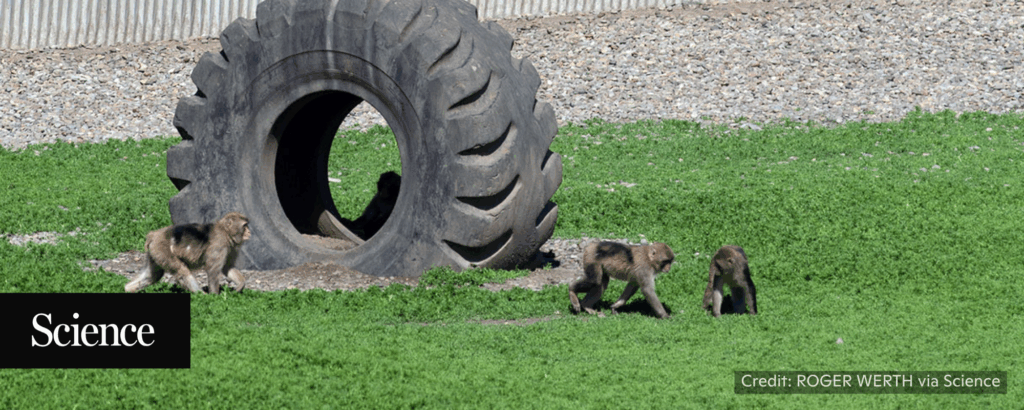
In unprecedented move, giant monkey research center may become a primate sanctuary
David Grimm, Science, 2/9/2026
“One of the largest monkey research centers in the United States may be on the road to becoming a primate sanctuary, a seismic change that would affect biomedical research across the country. Today, the board of directors of Oregon Health and Science University (OHSU) voted to start discussions with the U.S. National Institutes of Health (NIH) about transforming the Oregon National Primate Research Center (ONPRC) into a reserve where no research is done. Animal advocacy groups hail the decision, but it has shocked primate researchers at ONPRC and beyond.”
“NIH Director Jayanta ‘Jay’ Bhattacharya recently told Politico that NIH is ‘working to transition’ one of the national primate centers to a sanctuary, and in a response to Science 2 days after this story originally published, the agency said, ‘NIH and [OHSU] agreed to transition [ONPRC] to a primate sanctuary over the next 6 months. … NIH will support a smooth transition and ensure appropriate care for the animals as they move to the sanctuary.’”
“Science has communicated with the heads of each of the six other NPRCs, and none say NIH has reached out to them about a closure or conversion.” 📰 Full Story →
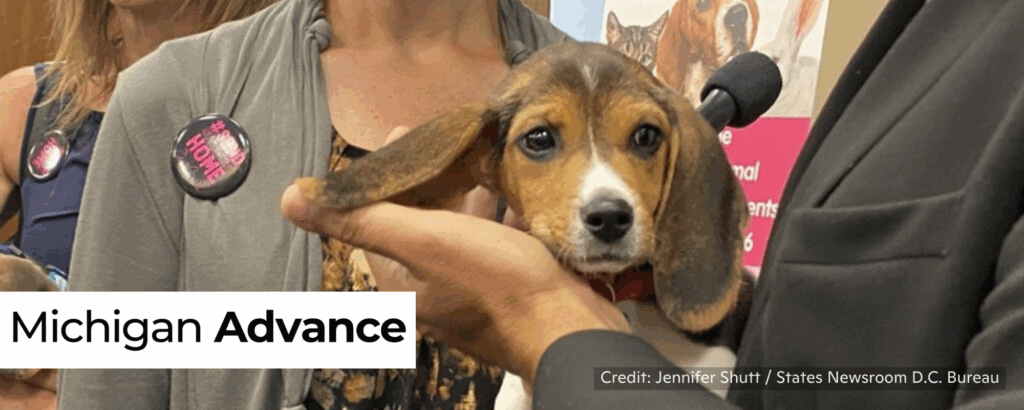
Bipartisan group of Michigan lawmakers asks NIH to stop funding Wayne State beagle testing
Ben Solis, Michigan Advance, 2/9/2026
“A Republican state representative [State Rep. Joseph Aragona (R-Clinton Township)] is leading a group of Michigan legislators in asking the National Institutes of Health to stop funding medical experiments on beagles at Wayne State University. Since 1991, the university has experimented on beagle dog breeds in which medical devices are implanted and they are forced to run on treadmills until they have heart attacks, the lawmakers said in a letter to U.S. Department of Health and Human Services Secretary Robert F. Kennedy Jr. and NIH Director Jay Bhattacharya. Every dog in this program eventually dies, the letter states.”
“Wayne State’s NIH grant is set to expire in March, and Aragona and his colleagues are asking that no other funding be offered to the project past that date, and to deny any future funding involving dogs and the same researcher.” 📰 Full Story →
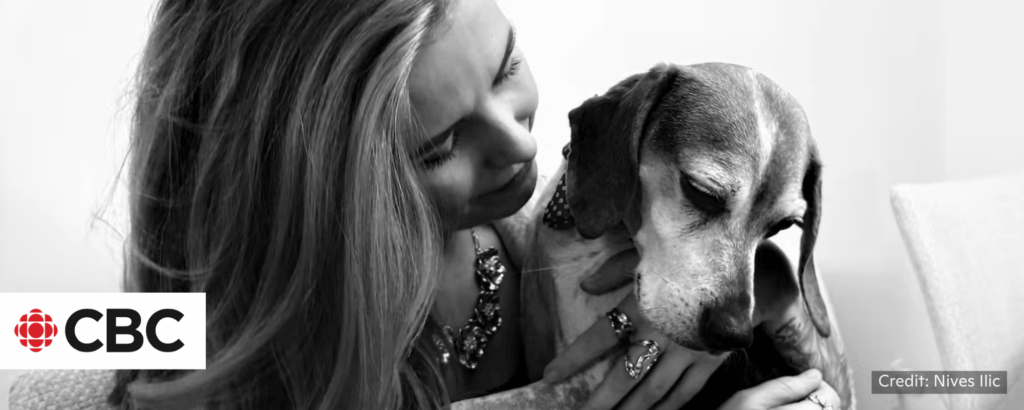
I thought I understood what animal testing meant until I brought home a former lab dog
Nives Ilic, CBC, 2/10/2026
“Mack spent the first six years of his life in a laboratory. I thought I knew what that meant. I had been involved in animal advocacy for years, fostered and adopted homeless animals and even visited slaughterhouses to provide water and comfort to animals about to be killed. I believed I was prepared for what it would mean to bring a former research dog into my home. I wasn’t.”
“During the car ride home, I could hear Mack trembling in his crate. Shortly after, we discovered he was terrified of our building’s elevator — he shook uncontrollably and urinated as soon as we stepped inside. I assume the laboratory he was in also had one. Reality hit me and I began imagining the following weeks of my life — living with an angry, aggressive dog that feared everything. But I was wrong. Despite the harm Mack had experienced at the hands of humans, all he wanted was what most of us do: to be loved. Mack followed me everywhere, constantly wanting to be held. He was sweet and curious with our other dog and cat, friends, neighbours and even complete strangers on the street. Despite being deprived of so much, Mack still approached the world with tenderness.”
“It also became clear that Mack was not like other animals I had fostered or adopted. Shelter or street dogs at least had a chance to live as a dog and to explore the world beyond a cage. Dogs rescued from laboratories, however, are used as test subjects. Despite being almost seven, Mack was experiencing everything for the first time. He wasn’t potty trained, didn’t know how to walk up stairs or on a leash and was afraid of — or disinterested in — most toys.”
“Today, I am happy to say that Mack is living a great second half of his story . . . he now spends his days sleeping in a soft bed, running and playing with other dogs and basking in the affection he has always clearly sought. Holding him close, I am reminded of the loneliness he endured — and of the hope that one day, no animal like Mack will have to suffer for science.” 📰 Full Story →
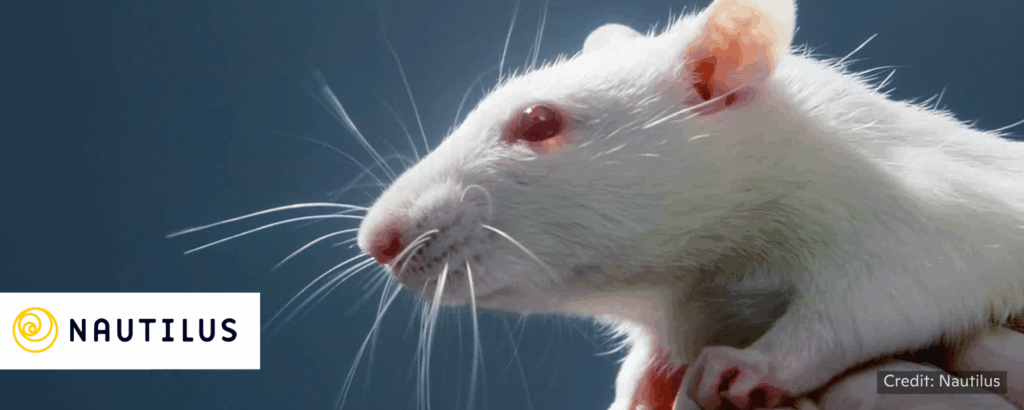
How Animal Suffering Can Ruin Lab Experiments
Larry Carbone, Nautilus, 2/10/2026
“Through my veterinary work, I began to understand the wide range of animals from fish and shrimp to dogs and monkeys capable of experiencing pain, and pleasure, and desires. They are sentient and can suffer….”
“Medical researchers should know how much animal suffering can throw off their animal experiments. Animals who are sick, in pain, stressed, cold, frustrated, or thirsty respond differently to experimental cancer treatments. Their immune systems and their brain development are out of whack. Stress affects glucose metabolism, throwing a wrench into diabetes experiments . . . The more welfare scientists explore animal pain and pleasure, the more they point to the ways that animal stress is not just bad for the animals but also bad for the scientists’ data.”
“The better we get at measuring animal suffering, the clearer it is that we miss seeing it 90 percent of the time. So, scientists and ethics committees must therefore assume that their experiments are more painful than they realize….” 📰 Full Story →
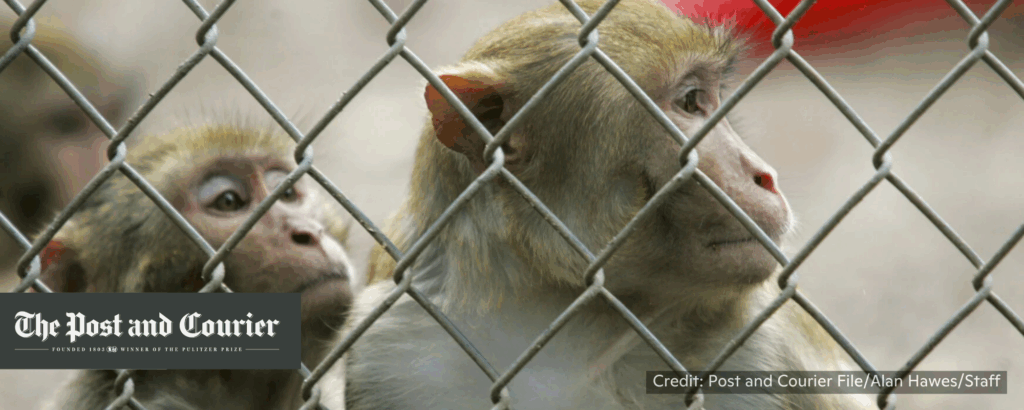
A ‘Rikes Island’ vacation: SC monkey farm seeks to expand primate retirement services
Mitchell Black & Marilyn W. Thompson, The Post & Courier, 2/11/2026
“A South Carolina company that has secured over $120 million in federal money to breed monkeys is now offering a new service: a retirement home for primates no longer needed in medical experiments. Alpha Genesis is promoting its ability to care for aging and damaged monkeys, part of a national movement to retire monkeys used in federal and private research.”
“The Trump administration has begun phasing out monkey testing at major health agencies. National primate research centers are struggling to maintain the thousands of primates they accumulated for testing, an Alpha Genesis news release said. The company cautioned against sending animals to sanctuaries, saying they could typically care for small monkey populations and lacked sufficient medical capability. Instead, Alpha Genesis touted its own capability to handle the influx of monkeys facing housing insecurity.”
“Animal rights advocates have found Alpha Genesis’ expanded interest in re-homing primates to be hypocritical. Among them is Marymount University psychology professor Stacy Lopresti-Goodman, who has evaluated monkeys for post-traumatic stress disorder after they have left laboratory settings. ‘Rebranding Alpha Genesis as a so-called retirement home for monkeys is like saying people are sent to Rikers Island for vacation,’ said Lopresti-Goodman . . . The notorious Rikers Island is home to a sprawling New York City jail complex.” 📰 Full Story →
Help spread the word. Share this news compilation on Facebook, X, or Bluesky.